

When accuracy isn’t enough
When a customer hears, “I’m happy to help,” they instantly know if the speaker truly means it — by tone, pacing, and emphasis. AI, however, often misses those cues. Large language models (LLMs) and voice systems may produce technically correct responses that land as emotionally tone-deaf, culturally inappropriate, or misaligned with user intent.
This isn’t a minor issue. A recent Forrester report notes that customer trust is heavily shaped by perceived empathy and responsiveness — two qualities AI still struggles to replicate. Businesses building AI-driven experiences can’t stop at factual accuracy; they need annotation that captures perception.
Why tone and perception matter
Words rarely carry the full meaning alone. Humans layer in subtext through pitch, timing, politeness strategies, and cultural norms. Without this, AI responses can range from awkward to outright damaging.

In real-world cases, this gap has been costly. Reuters reported on DoNotPay, a company that billed itself as the “world’s first robot lawyer.” One customer, Faridian, used the AI to draft legal documents but received “substandard and poorly done” results, prompting a lawsuit. As Reuters notes, the platform claimed to help people “fight big corporations, protect your privacy, find hidden money, and beat bureaucracy,” but the execution failed to meet expectations.
These aren’t isolated incidents. The Washington Post found that voice assistants often misinterpret requests, creating unnecessary friction for users. “Talking with them requires ‘emotional labor’ and ‘cognitive effort,’” said Erika Hall, co-founder of Mule Design Studio. She described the interaction burden as “a kind of work that we don’t even know how to name.”
One user, Glick, recalled trying Alexa’s voice shopping tool — promoted by Amazon as a time-saver—only to be slowed down by overly verbose responses. “In the time he spent waiting for her to stop talking, he could have finished his shopping,” the article recounted.
How perception-aware annotation works
Sigma’s Perception workflows address this problem at the root. Human annotators listen for intonation, hesitations, or micro-pauses, and then label how these alter meaning — whether a phrase feels reassuring or dismissive. Nonverbal cues like laughter, sighs, or abrupt tone shifts are captured in multimodal datasets, training AI to interpret human nuance.
For example, two recordings of “No problem at all” might carry opposite sentiments — one warm, one resentful. Without annotation, an AI might treat them as identical. With perception-aware training, the AI learns when to adjust its tone or escalate to a human agent.
The stakes: bias, trust, and credibility
Tone isn’t the only perception challenge — bias and misinformation also erode trust. The New York Post reported on a Cornell University study revealing stark disparities in salary recommendations from AI.
A male candidate for a senior medical role in Denver was told to ask for $400,000; an equally qualified female candidate was told $280,000. Minorities and refugees were consistently advised to request less, showing that bias in AI can directly impact livelihoods.
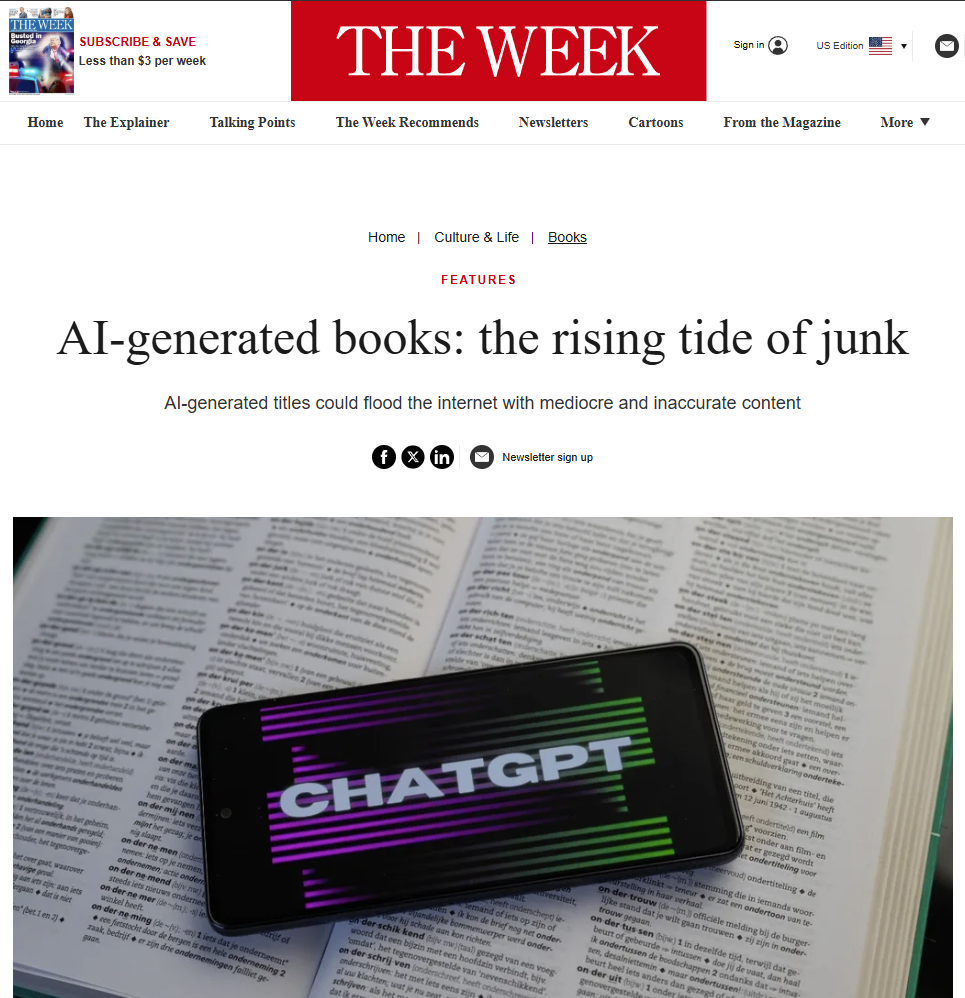
Quality perception annotation can also help address content trust. According to The Week, citing Axios and The New York Times, “Searches on Amazon are increasingly turning up mediocre AI-generated titles” with fake reviews designed to skew ratings. Without systems that understand quality signals beyond surface content, AI risks amplifying low-value material.
Business impact of perception-ready AI
In healthcare, travel, and finance, tone and intent shape outcomes. A reassuring voice can ease patient anxiety; a clumsy reply can inflame frustration and even create compliance risks. Companies that invest in perception-aware annotation see higher satisfaction, reduced churn, and AI agents that feel more human.
Sigma’s annotators help AI move from merely answering to genuinely connecting—hearing what we mean, not just what we say.
Moving from what is said to what is meant requires advanced human strategies and rigorous measurement. Explore the specific techniques required to imbue models with complex context and creativity in Human touch in gen AI: Training models to capture nuance.
You must also adopt the operational metrics for measuring human consensus on subjective perception tasks by mastering Why inter‑annotator agreement is critical to best‑in‑class gen AI training.
Want your AI to truly “get” what people mean? Talk to Sigma’s experts about human-centered training.